How Gold Spot Pricing Actually Works (And Why Dealers Quote You Less)
The number you see on Kitco isn't what dealers pay. Here's the math behind spot, bid, ask, and the spread — and why honest dealers tell you upfront.
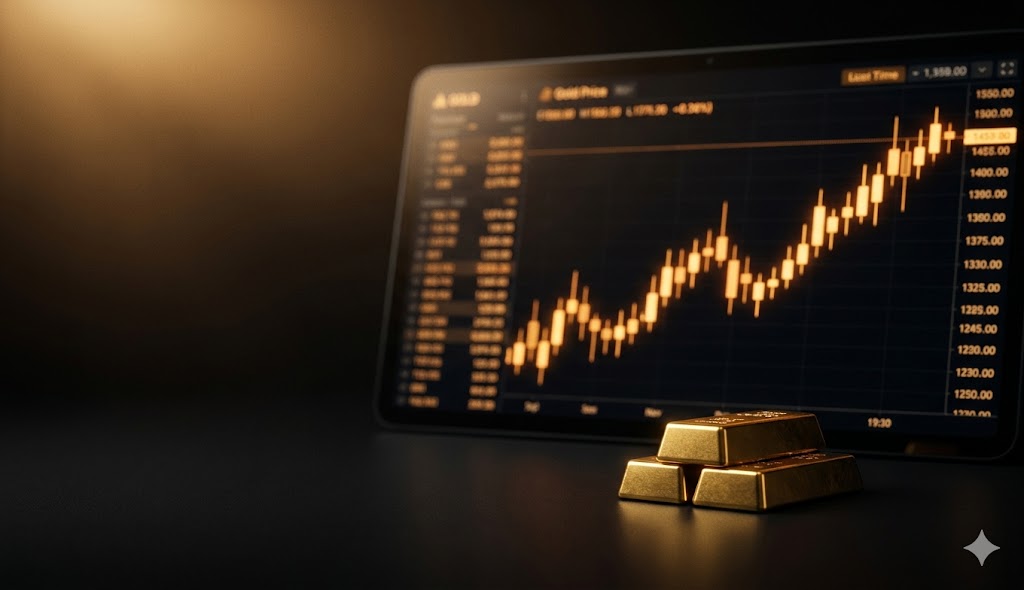
Open Kitco. You see a number — let's say gold is $3,420/oz today. You walk into a dealer with a 1-ounce American Eagle expecting $3,420, and you walk out with a quote of $3,310. That's a $110 gap. Is the dealer ripping you off? Probably not. Here's what's actually happening, and how to tell the difference between a fair quote and one you should walk away from.
Spot is a benchmark, not a price
The "spot price" of gold is a wholesale benchmark for unrefined gold delivered in 400-ounce London Good Delivery bars between major banks and refineries. It's the reference point everyone uses, but almost nobody actually transacts at exactly spot. Spot is what the metal would cost if you were buying a million dollars of it from a refinery on a cleared settlement basis. You're not. You're selling a coin or a chain to a retail dealer, and that transaction has costs spot doesn't include.
Three numbers actually matter when you're at the counter:
- Spot — the wholesale benchmark. Updates every few seconds during market hours.
- Bid — what dealers will pay you for gold right now.
- Ask — what dealers will sell gold to you for right now.
The gap between bid and ask is called the spread. On a 1-oz coin in normal market conditions, the spread might be 2–4% of spot. On scrap gold jewelry, it's wider — sometimes 15–25% — and the reasons are concrete, not arbitrary.
Why the spread exists (and why it's wider on jewelry)
Every dollar a dealer pays you below spot is paying for something specific. Here's the breakdown on a typical 14k jewelry transaction:
- Refining cost — Jewelry isn't pure. A 14k chain is 58.3% gold. To turn it into something a refiner will pay spot for, the dealer pays a refinery 1–3% of the metal value to melt, assay, and separate the alloys.
- Assay risk — The dealer is buying based on a karat stamp and a quick acid or XRF test. If the chain turns out to be 10k instead of 14k, the dealer eats the difference. Spread covers that risk.
- Float capital — Between buying your chain and getting paid by the refinery, the dealer carries the metal for 7–30 days at spot price risk. If gold drops 4% during that window, the dealer loses 4% on the position.
- Overhead — Storefront rent, employee time, security, insurance, the cost of being a licensed precious metals buyer in your state. None of this is free.
- Margin — The dealer needs to make money. A few percent on top of all of the above.
Add it up and you get the wholesale spread that exists between what a dealer pays and what spot says. On a coin like an American Eagle, most of those costs disappear — coins are pre-refined, the assay risk is near zero, and the float window is short because the dealer can resell to another dealer at near-spot. That's why coins pay 95–98% of spot while jewelry pays 70–85%.
Today's math: a worked example
Numbers anchor everything. Let's run a real transaction at today's spot.
You bring in a 10-gram 14k gold chain. Today's spot is $3,420/oz. Here's the math any honest dealer will show you, line by line:
- Total weight: 10 grams
- 14k purity: 58.3% (the rest is alloy — copper, silver, zinc)
- Pure gold content: 10g × 0.583 = 5.83 grams of pure gold
- Convert to ounces: 5.83g ÷ 31.1035 = 0.1875 troy oz
- Spot value (100%): 0.1875 oz × $3,420 = $641.25
- At 80% payout: $641.25 × 0.80 = $513.00
- At 70% payout: $641.25 × 0.70 = $448.88
That $64 gap between an 80% dealer and a 70% dealer is the difference between a fair quote and a poor one on the same chain. The work is identical — the only thing that changed is the percentage of spot the dealer is paying. This is why comparing two or three dealers on the same item is the single most reliable way to know you're getting a fair deal. The math is repeatable; the percentage is negotiable.
Where the spread actually goes (by item type)
Every item type pays a different percentage of spot because the costs the dealer absorbs are different. Here's what to expect on common items at today's $3,420/oz spot:
| Item | Pays % of Spot | On 1 oz Equivalent | Why |
|---|---|---|---|
| 1oz American Gold Eagle | 95–98% | $3,249 – $3,352 | Fungible, no refining, fast resale |
| 1oz Krugerrand (22k) | 94–97% | $3,215 – $3,317 | Fungible, near-zero assay risk |
| 14k Jewelry (per oz pure) | 72–82% | $2,462 – $2,804 | Refining cost, assay risk, float |
| 10k Jewelry (per oz pure) | 68–76% | $2,326 – $2,599 | Lower purity, harder to liquidate |
For jewelry-specific math, see our jewelry vs. coins post. For purity breakdowns from 10k to 24k, see our karat payout breakdown.
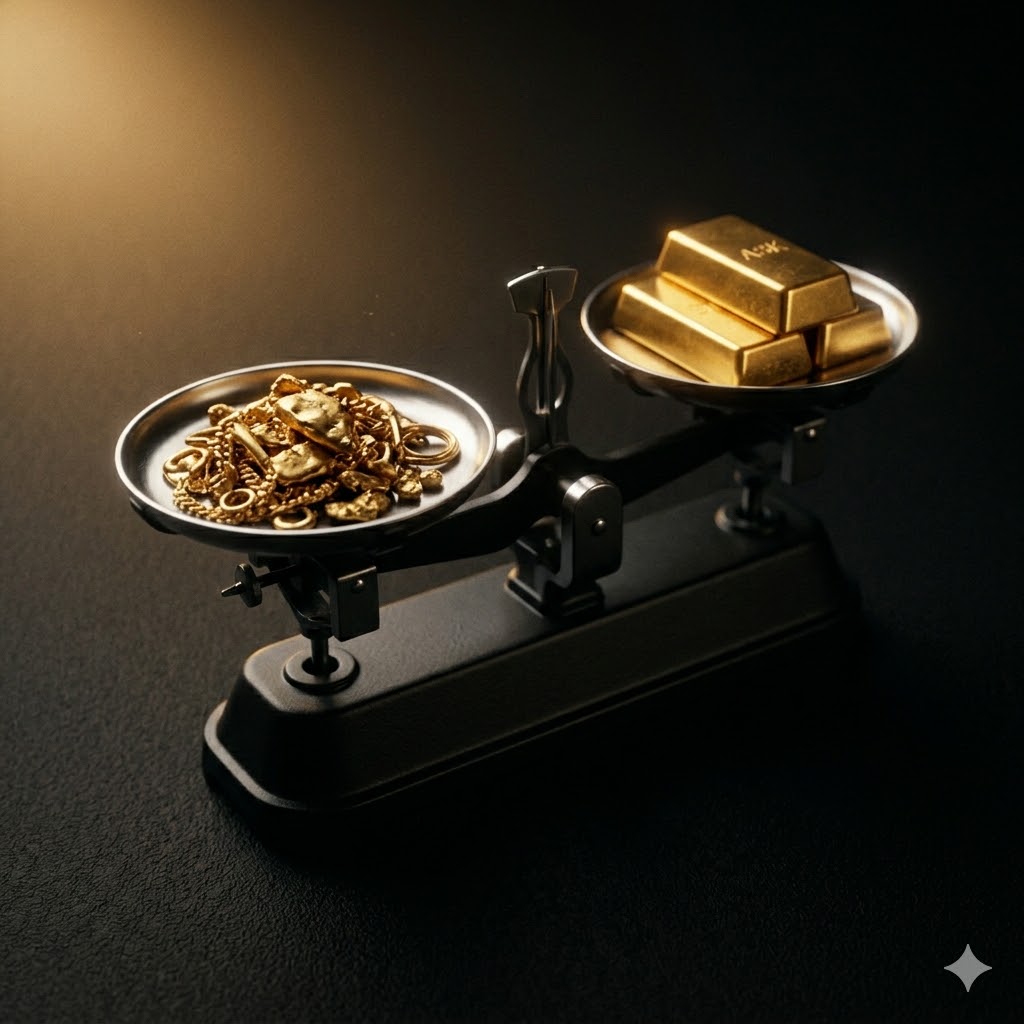
What dealers wish customers knew
Five things that come up at the counter every week, from dealers who handle this every day:
- The Kitco number is the start of the conversation, not the end. Customers walk in expecting Kitco's number on a chain. That's like expecting wholesale wine prices at a restaurant. Spot is the reference; your payout is spot minus a transparent spread.
- Karat stamps lie surprisingly often. Plumb 14k stamped jewelry frequently tests at 13k or even lower. A dealer who tests in front of you isn't being suspicious — they're protecting both of you from a misquote.
- Old jewelry is rarely worth more than its melt value. Unless it's signed designer (Cartier, Tiffany, Bvlgari) or has gemstones a dealer can resell, a vintage gold piece pays the same as a modern one of equivalent purity and weight. Sentimental value is real but it doesn't move the price.
- "We pay 95% of spot on all items" is a marketing line, not a quote. No dealer pays 95% on 14k jewelry — the refining math doesn't allow it. If you see that ad, expect the actual quote at the counter to land much lower after "deductions."
- Bring everything you have at once. Dealers can quote tighter spreads on larger lots because float and overhead are amortized. A 50-gram pile pays a higher percentage than three separate 15-gram visits.
What an honest quote looks like
A fair dealer will tell you, before you commit:
- What today's spot is, in the same units you brought (ounces, grams, pennyweight).
- What percentage of spot they're offering on your specific item.
- The math, not just the final number. "10g at 14k = 5.83g of pure gold. At today's spot of $3,420, that's $641 in gold. We're paying 80%, so $513."
- Whether the quote is good for the day or just the next 15 minutes.
A dealer who refuses to show the math is either bad at their job or hoping you don't ask. Either way, walk. You can verify today's spot on our live prices page before you head over.
When the spread tells you to walk
If a dealer offers below 65% of spot on standard 14k jewelry without a clear explanation, the spread is too wide. Common reasons it gets unfair: the dealer is testing what they can get away with, you're at a high-overhead "we buy gold" mall kiosk, or the market is volatile that day and they're pricing in extra float risk. The fix is the same regardless: get a quote from one or two other dealers. Comparing gold dealers takes 20 minutes and routinely surfaces 10–15% payout differences on the same item.
Run your gold through our live calculator
Karat × weight × today's spot, with our 80% payout shown openly. No commitment, no email needed. Or call (213) 373-4424 for a quote over the phone.
Get an instant quote →Why doesn't your quote match Kitco?
Kitco displays the wholesale spot benchmark for cleared 400-oz London bars between banks and refineries. Your transaction isn't that — you're selling a retail item to a dealer who has to pay for refining, float capital, overhead, and a margin. Expect 70–85% of Kitco on jewelry and 95–98% on common bullion coins. A dealer paying 100% of Kitco isn't possible without losing money.
Do you charge a fee on top of the spread?
No. Our payout percentage is the only deduction. The number we quote is the number you walk out with — no testing fee, no transaction fee, no "refinery handling charge" on top. If a dealer's quote includes line-item deductions after the percentage of spot, that's a sign the headline percentage was misleading. Our process is one number: spot × payout percentage = your check.
What's a fair spread?
For 1oz American Eagles or Krugerrands, expect to receive 95–98% of spot. For 14k jewelry, fair is 75–82% of spot per pure-gold ounce. For 10k jewelry, fair is 68–76%. Anything significantly below those bands without a clear explanation (a volatile market day, a tiny lot, a damaged piece) deserves a second opinion. Spreads should be predictable, not random.
How often does spot change?
During market hours (Sunday 6pm ET through Friday 5pm ET), gold spot updates roughly every five seconds. Dealers refresh their quoted bid percentage less frequently — usually a few times a day or when the market moves more than 0.5%. That's why a quote you got at 10am may not be valid at 3pm if gold dropped $20. Most dealers will hold a quote for 15–30 minutes once given.
Can I lock in a price before driving over?
Some dealers will, some won't. We hold quotes for 30 minutes once given over the phone, assuming the metal you described matches what walks in. For larger transactions (over $20,000), we can lock spot for the trading day. Smaller scrap pieces typically settle at the spot when you arrive. Call (213) 373-4424 if you want to lock in before driving over.
Should I shop multiple dealers?
Yes. 10–15% payout differences on the same item are common between dealers in the same city. The metal is identical; the percentage paid is not. We're confident in our pricing — see how we compare, and bring our quote with you to two other dealers before you commit.
Does the spot price include taxes or my shipping costs?
No. Spot is a pure metal benchmark. Sales of investment-grade gold (.995+ purity) are exempt from California sales tax above $2,000, but jewelry resold for melt is treated as a metal sale, not a retail sale — no tax for the seller. If you ship, the dealer typically covers insured shipping for transactions over $1,000. Always confirm before you ship.
Spot price is a benchmark. Your payout is spot minus a spread that pays for refining, assay risk, float, overhead, and dealer margin. On coins, that spread is small. On jewelry, it's larger but should still be predictable. If a dealer can show you the math and the percentage they're paying off spot, you can make an informed decision. If they can't, that's the answer. Prices subject to current spot. Calculations are illustrative.