Scrap Gold vs Coin Payouts: Why the Same Weight of Gold Pays Differently
A 14k bracelet and a 1/4 oz Gold Eagle can hold similar pure gold content but pay out 10–25% apart — here's why, and which buyer to take each to.
Gold Price Charts Explained: Bid, Ask, Spot, and What Dealers Actually Use to Quote You
A plain-English breakdown of bid, ask, and spot prices on a live gold chart, which number a dealer actually uses to quote your payout, and how to read the chart before you walk in.
Why Two Dealers Quote Different Prices for the Same Gold Coin
Two reputable dealers can quote different numbers on the same American Eagle or Krugerrand. Here's what actually moves the price, and how to tell a fair gap from a lowball.
How to spot a lowball gold offer: five dealer tactics to watch for
Five pricing tactics dealers use to underpay gold sellers, with a clear counter-move for each so you can compare quotes and walk away from the bad ones.
Silver Spot Price vs. Payout: What Dealers Actually Pay for Bullion
The silver spot price on Kitco is not the offer you get at the counter. Here is how dealers price rounds, bars, junk silver, and sterling, and where the spread comes from.
Gold Karat Stamps Explained: What 10K, 14K, 18K, 22K, and 24K Actually Mean for Your Payout
A direct breakdown of gold karat stamps, the pure-gold fraction behind each marking, and exactly how those numbers translate into the cash offer you receive when selling.
Spot price versus payout: why dealers pay less than the headline gold quote
The gold price you see online is not the price a dealer pays for your jewelry. Here is how to read the gap between spot and payout, and how to spot a fair offer.

How Gold Spot Pricing Actually Works (And Why Dealers Quote You Less)
The number you see on Kitco isn't what dealers pay. Here's the math behind spot, bid, ask, and the spread — and why honest dealers tell you upfront.
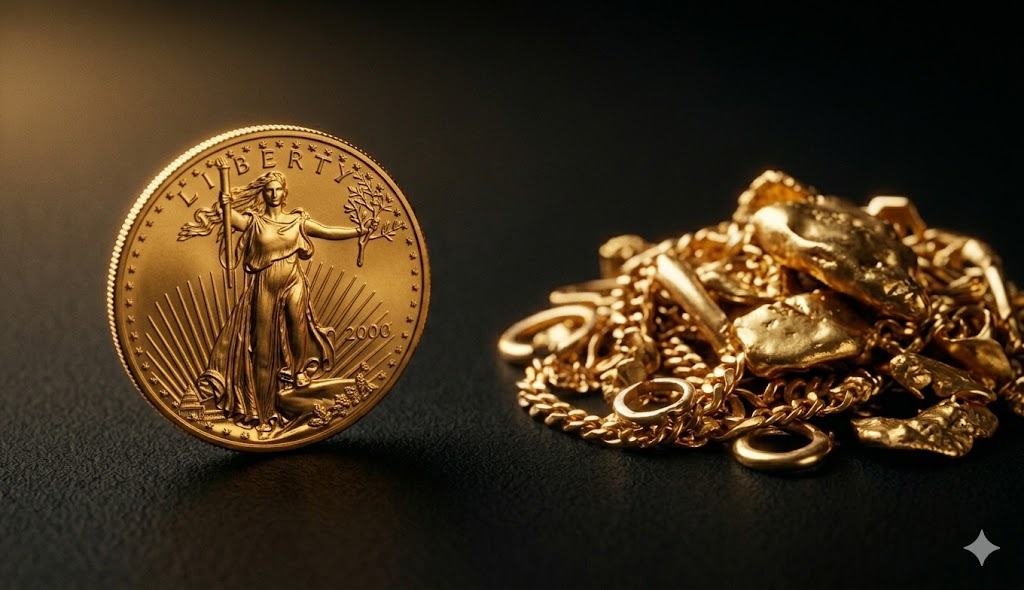
Selling Gold Jewelry vs. Gold Coins: Why Your Payout Differs
A 1oz American Eagle pays more than a 22-gram 14k chain — even though the chain weighs more. Here's why, with concrete numbers at today's spot.
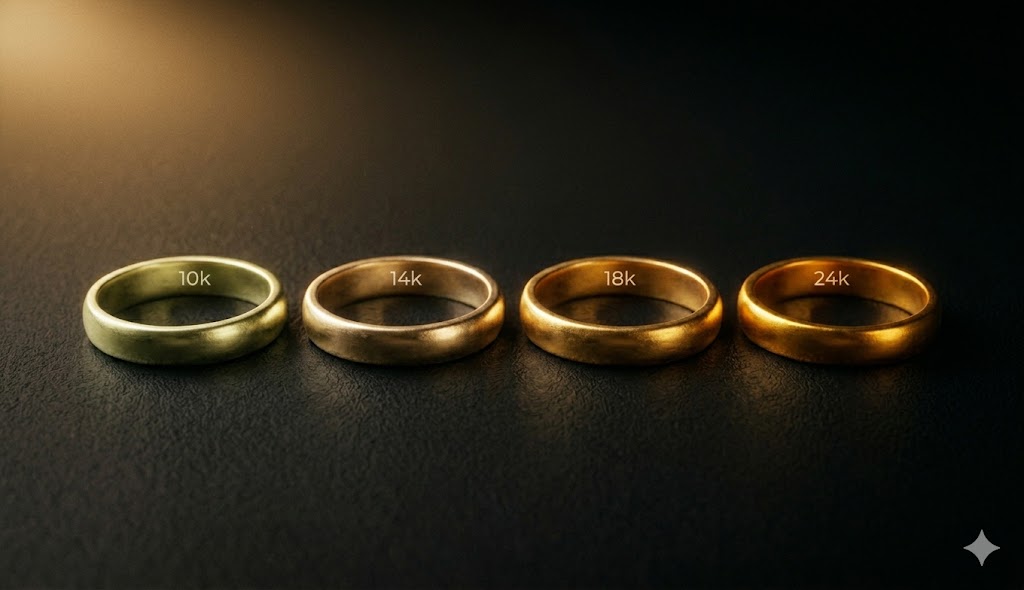
What Gold Karat Means for Your Payout: 10k vs 14k vs 18k vs 24k
Karat purity directly determines what your gold is worth. Here's the math from 10k to 24k, with worked examples at today's spot price.
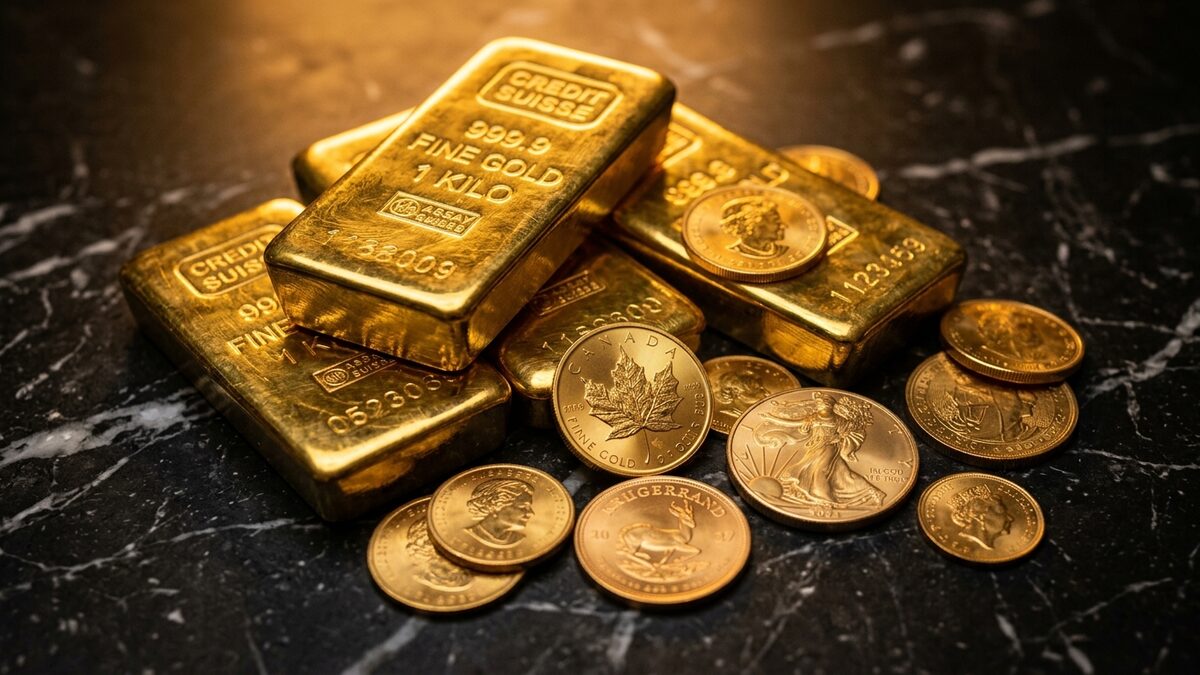
Gold Bar vs. Gold Coin: Which Form Is the Better Investment?
Lower premiums or better divisibility — the difference matters more than most buyers expect when it comes time to liquidate.
Gold Hallmarks Explained: What the Stamps on Your Jewelry Actually Mean
The karat stamp on your ring tells a story — if you know how to read it. Here is what U.S. and European hallmarks mean, and what to do when there is no stamp at all.