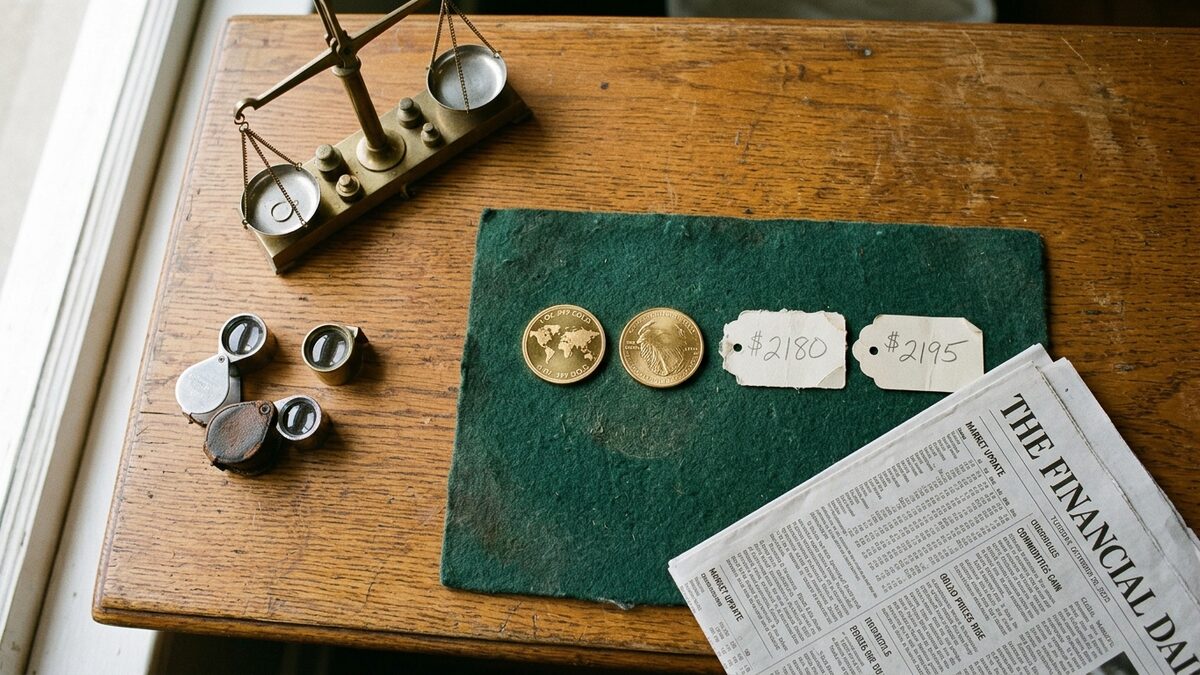
Every dealer quote is built from the same starting point: the live spot price of gold per troy ounce. From there, the dealer adds or subtracts a spread to arrive at the buy price they will pay you. That spread is where the entire conversation lives. Two honest dealers can land in different places on the same coin because their cost structure, inventory position, refiner relationship, and daily risk appetite are not the same.
The first lever is inventory position. A dealer who is already long American Eagles, meaning they have more on the shelf than they want, will quote a thinner buy price because the coin you bring in just adds to a pile they are trying to move. The dealer down the street may be short on Eagles that week because a wholesale order is pending, and your coin slots directly into demand. Same coin, same day, different value to each buyer. The dealer who needs the inventory will almost always pay more, and there is nothing dishonest about the dealer who does not.
The second lever is the refiner relationship. Dealers who melt and refine in-house, or who have a direct contract with a refinery, take a smaller haircut on the back end than dealers who have to sell their accumulated gold through a middleman. American Eagles and Krugerrands trade close enough to melt that this matters. A dealer running a thin refining margin can afford to pay you closer to spot because they know exactly what they will net when the coin gets processed. A dealer who jobs the coin out to a wholesaler has to bake that extra step into the quote.
The third lever is daily risk appetite. Gold moves. A dealer who locks in a price with you at 10 a.m. is taking position risk until they can hedge or sell that ounce. On a quiet day with a steady spot price, that risk is small and the spread can be tight. On a day when gold is swinging two percent intraday, dealers widen their spreads to protect against the move going against them between your quote and their hedge. If you call on a volatile morning, expect every quote to be a little wider than it would have been the week before. This is not a markup against you; it is the dealer pricing in the cost of the position they are about to carry.
How to Read the Gap Between Two Quotes
A reasonable spread between two reputable dealers on a common bullion coin is somewhere in the range of one to two and a half percent of spot. On a $2,400 ounce, that is roughly $24 to $60 between the high quote and the low quote. Gaps inside that range usually reflect the variables above and nothing more. The dealer paying less is not trying to take advantage of you; they simply do not need the coin as much, or they carry a higher cost structure.
When the gap widens past three percent, ask why. Sometimes the answer is legitimate. A pawn-style buyer who handles gold occasionally has higher overhead per transaction than a specialist who moves coins all day, and their quote will reflect that. A dealer who pays cash on the spot may quote lower than one who pays by wire two days later, because the cash-on-the-spot dealer is carrying float. These are real cost differences, and a quote that reflects them is not a lowball.
A lowball looks different. It is a quote that sits five to ten percent or more below spot on a clean, common, sealed bullion coin. There is no inventory story or refining story that justifies a number that wide. The buyer is either banking on the seller not knowing the spot price, or banking on the seller being in a rush. Either way, walk. The same coin will get you a meaningfully better number across the street, and the time you spend making one more call is the highest-paid hour of your week.
The practical move when selling a recognizable bullion coin is to get three quotes the same day, preferably within a two-hour window so spot has not drifted meaningfully between calls. Write each number down next to the live spot price at the moment of the quote. Convert each quote into a percentage of spot. The dealers paying ninety-eight to ninety-nine percent of spot are pricing the coin honestly. The dealer paying ninety-three percent has a reason; ask what it is. The dealer paying eighty-eight percent is hoping you do not check the next door over.
Two dealers quoting different numbers on the same Eagle is the normal state of the market, not a sign something is wrong. The market is many small businesses, each with their own inventory shelf, refiner contract, and tolerance for the day's volatility. Your job as the seller is not to find the one true price; there isn't one. Your job is to get enough quotes to know which side of the fair range each dealer is sitting on, and to recognize the number that falls off the chart entirely.