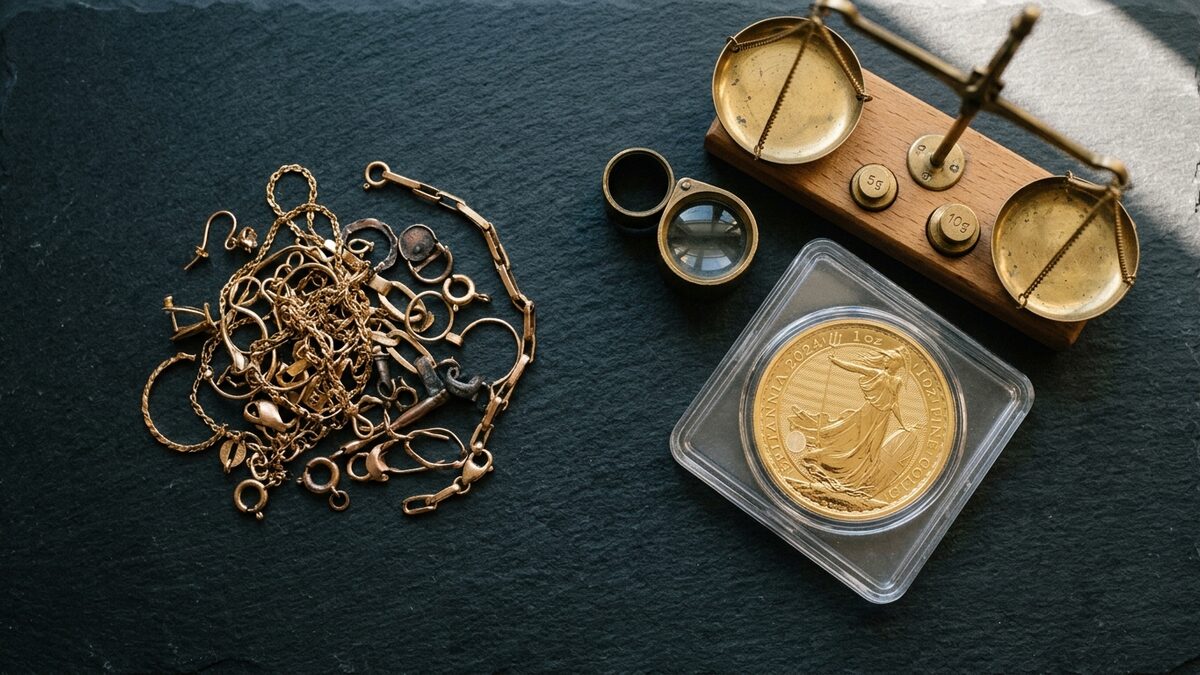
Start with what spot price actually represents. Spot is the price for one troy ounce of pure, deliverable gold in a recognized form, settled through commodity channels. It is the wholesale benchmark, not a retail offer. Every buyer in the chain works backward from spot, subtracting cost and risk to arrive at what they can pay you. The size of that subtraction is the entire story.
Scrap jewelry carries the heaviest deductions. A 14k piece is 58.3 percent pure gold by weight, mixed with copper, silver, and trace alloys to give it durability and color. Before any of that gold can be resold, it has to be assayed to confirm karat, melted, refined to .999 fine or higher, and recast into a deliverable bar. Refineries charge for this work, typically 2 to 4 percent of the gold's value plus a flat per-lot fee. Smaller dealers send scrap to a refiner in batches, which means they also carry inventory risk: the spot price can move 1 to 2 percent before the batch settles, and that risk lives in the offer.
Stack the deductions and a scrap payout of 85 to 90 percent of the pure gold's spot value is normal and fair. Below 80 percent is where the offer stops being competitive and starts being predatory. The dealer is not cheating you by paying 87 percent; the dealer is pricing in real costs that exist whether you see them or not.
Why coins clear the counter at a premium
A 1/4 oz American Gold Eagle contains 0.25 troy ounces of pure gold and weighs 8.483 grams total, alloyed with copper and silver for durability. It is, in raw material terms, not very different from your scrap bracelet on a per-gram-of-gold basis. The difference is everything that happens after the sale.
The Eagle does not need to be refined. It is already in a recognized, sealed, internationally traded form. A dealer who buys it can resell it that afternoon to a coin shop, a private investor, or a wholesale bullion network at near-spot prices. There is no refinery cost, no waiting period, no inventory drag. The coin also carries a numismatic and brand premium: collectors pay above melt for sealed government-minted bullion, and that premium gets shared backward up the chain to you.
That is why a clean Eagle in original capsule pays 95 to 98 percent of its full gold value, and sometimes more if the dealer has a buyer waiting. Krugerrands, Maple Leafs, and Vienna Philharmonics follow similar logic. The closer the coin is to a globally liquid product, the smaller the dealer's spread needs to be.
The same coin sold to a pawn shop, however, often pays 80 to 85 percent. Pawn shops are generalists. They do not have wholesale bullion accounts and they price for the worst case: a coin that sits in the case for 60 days before someone walks in. That holding cost shows up as a wider spread on every offer they write.
Matching the form of gold to the right buyer
Once you know which deductions apply to which form, the routing becomes obvious. Broken chains, mismatched earrings, dental gold, and class rings should go to a buyer who runs scrap volume and has direct refinery relationships. Ask whether they test with XRF or acid, whether they pay by karat or by assay, and what percentage of the day's spot they are quoting. A scrap buyer paying 88 percent on 14k at posted spot is doing honest work.
Bullion coins, sealed bars, and recognized rounds should go to a coin dealer or bullion specialist, not a pawn shop or a general jewelry buyer. The bullion buyer can resell within 24 hours and will share that liquidity with you in the form of a tighter spread. Bring coins in original capsules or tubes when possible; loose handling drops the premium a percentage point or two because the dealer has to discount for resale presentation.
Mixed lots, a few coins and a pile of scrap, are where dealers earn their reputation. A buyer worth using will quote them separately rather than averaging everything to scrap rates. If you bring in a Gold Eagle and a broken bracelet and the offer treats them as one number, you are being underpaid on the coin. Ask for the breakdown and listen to how they answer.
The frustrating cases are jewelry with secondary value: signed designer pieces, period jewelry, gem-set items where the stones matter. These rarely pay best as scrap because the resale value lives in the design, not the metal. A specialist estate jeweler or auction house may pay multiples of melt for the right piece. A scrap buyer cannot, because they sell to a refinery that values only the gold content.
The bottom line: gold is not one market. It is three, sometimes four, stacked on top of each other, each with its own resale path and cost structure. A 31-gram 14k bracelet and a 1/4 oz Eagle look identical on a precious-metals calculator, but they live in different worlds the moment they leave your hand. Knowing which world your piece belongs in is the difference between a fair payout and a great one.